Introduction In Indian philosophy, several paths have been described for attaining liberation (moksha), among which Bhakti Yoga is considered the simplest, most natural, and most accessible. While Jnana Yoga requires deep intellectual inquiry and Karma Yoga demands disciplined action, Bhakti Yoga is based on love, devotion, and complete surrender to God. Bhakti Yoga is not
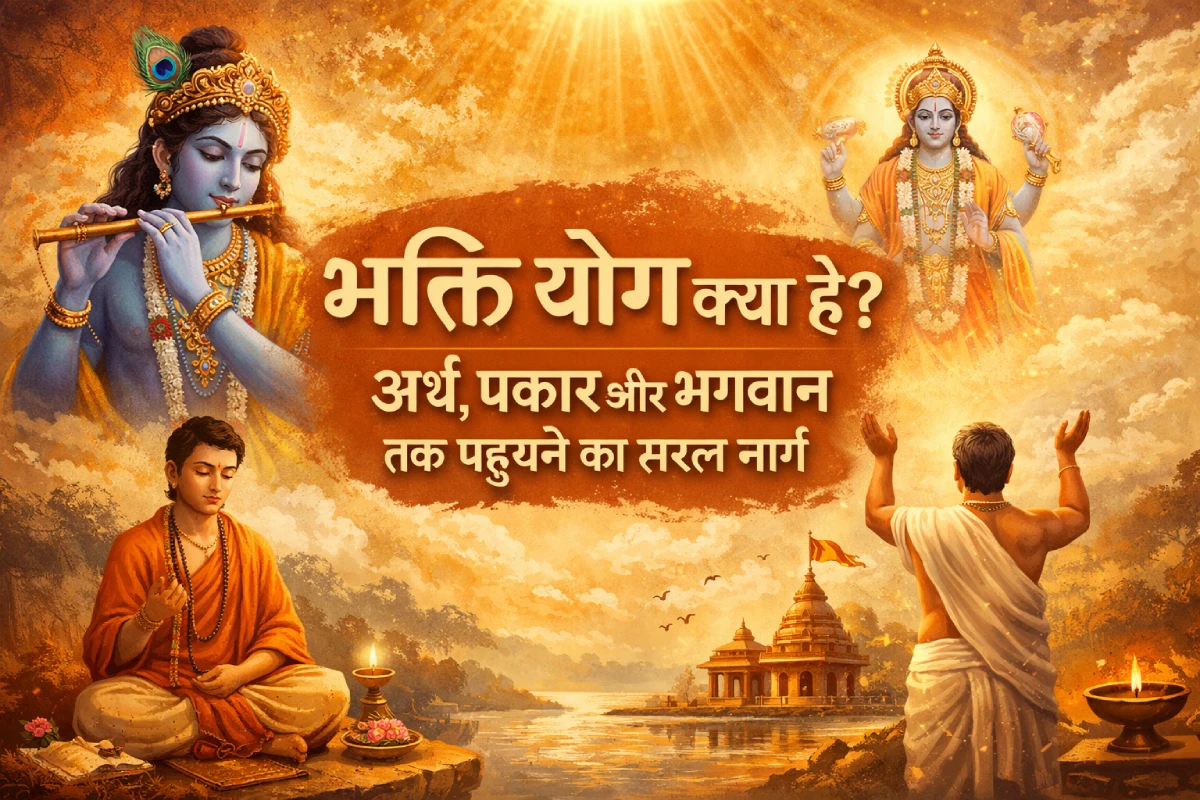
भूमिका भारतीय दर्शन में मोक्ष प्राप्ति के अनेक मार्ग बताए गए हैं, जिनमें भक्ति योग को सबसे सरल, सहज और सर्वसुलभ मार्ग माना गया है। जहाँ ज्ञान योग गहन अध्ययन और कर्म योग अनुशासित कर्म की अपेक्षा करता है, वहीं भक्ति योग प्रेम, श्रद्धा और समर्पण पर आधारित है। यह योग न केवल आध्यात्मिक उन्नति
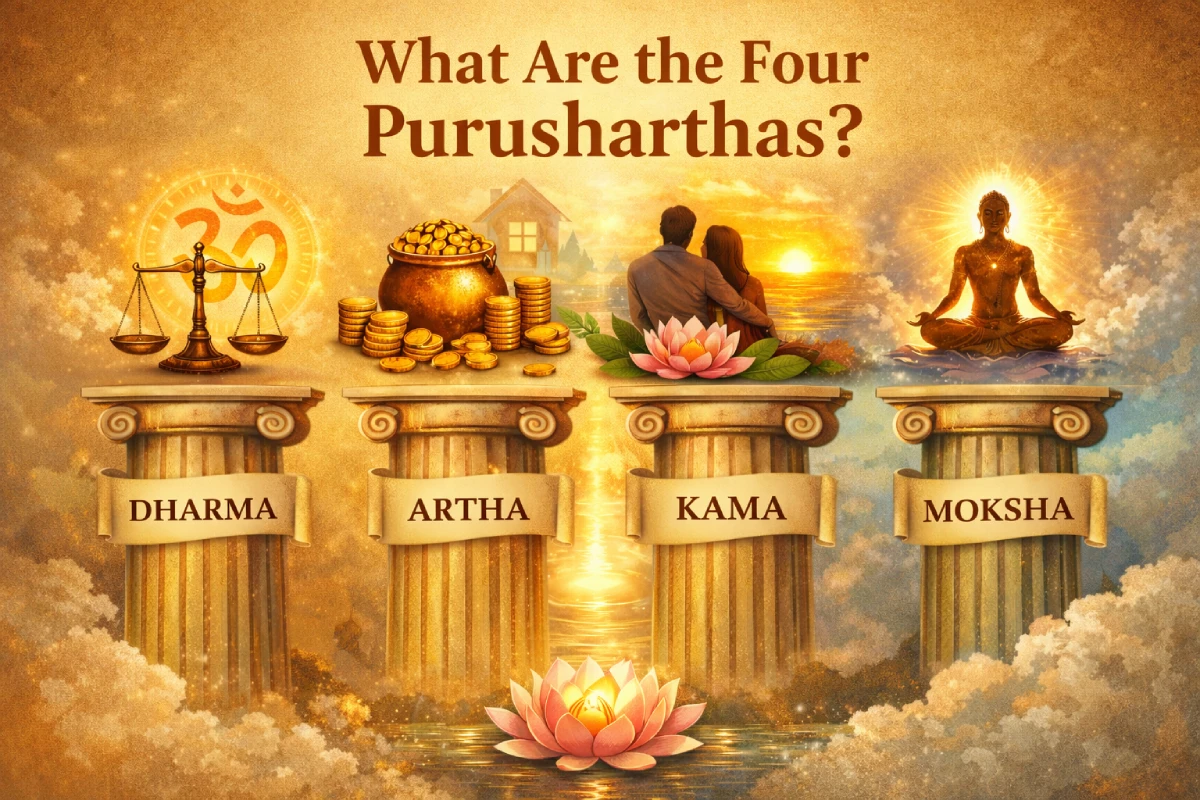
Introduction Sanatan Dharma is not limited to rituals or religious practices; it offers a complete philosophy of life that guides human beings toward balance, purpose, and fulfillment. At the heart of this life philosophy lies the concept of the Four Purusharthas. The Purusharthas represent the four fundamental goals of human life. According to Sanatan Dharma,
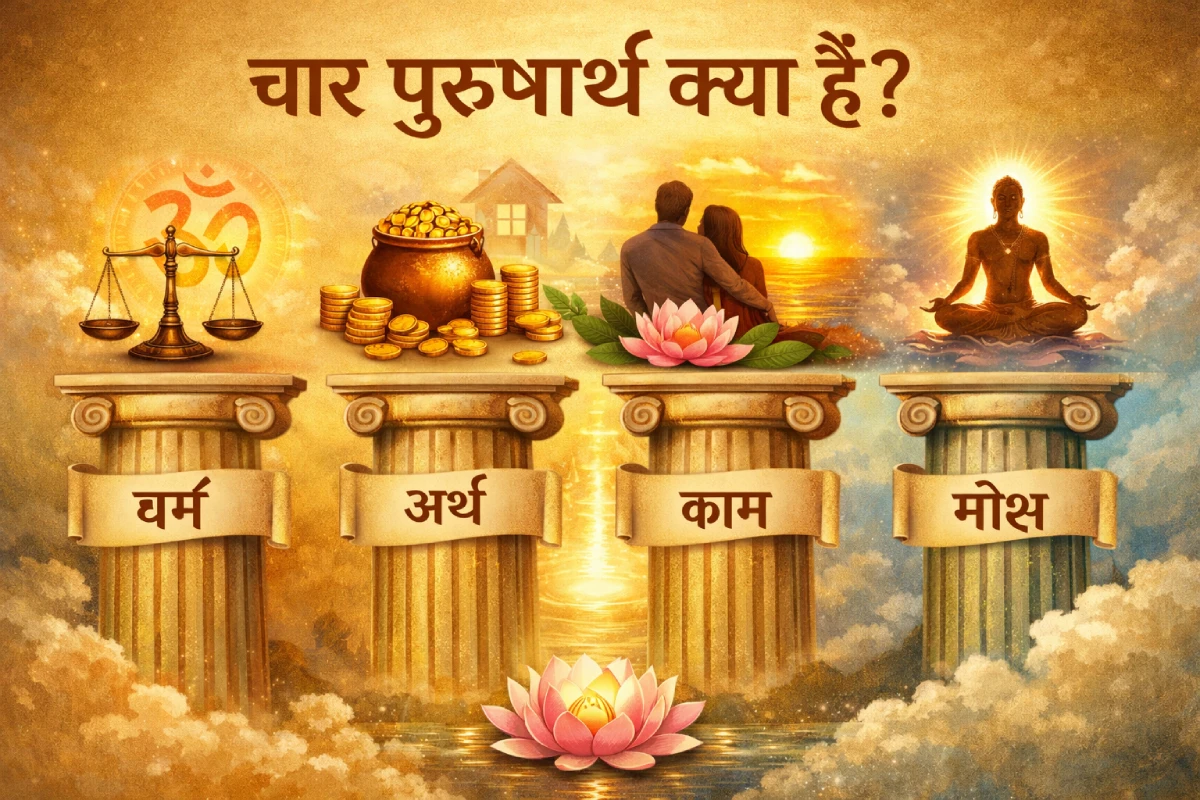
भूमिका सनातन धर्म केवल पूजा-पाठ या धार्मिक अनुष्ठानों तक सीमित नहीं है, बल्कि यह जीवन को संतुलित, उद्देश्यपूर्ण और सार्थक बनाने की संपूर्ण जीवन-दृष्टि प्रदान करता है। इस दृष्टि का आधार हैं चार पुरुषार्थ। पुरुषार्थ का अर्थ है—मानव जीवन के वे लक्ष्य जिनकी प्राप्ति के लिए मनुष्य प्रयास करता है। सनातन धर्म के अनुसार, यदि
Introduction In Sanatan Dharma, human life is guided by three fundamental principles—Dharma, Karma, and Moksha. Dharma provides the moral direction, Karma represents action, and Moksha is the ultimate goal of life. Moksha is often misunderstood as heaven or a reward received after death. However, in Sanatan philosophy, Moksha means complete liberation from ignorance, attachment, suffering,
भूमिका सनातन धर्म की मूल अवधारणाओं—धर्म, कर्म और मोक्ष—में मोक्ष को जीवन का परम लक्ष्य माना गया है। धर्म जीवन को सही दिशा देता है, कर्म उस दिशा में चलने की प्रक्रिया है, और मोक्ष उस यात्रा की पूर्णता है। अक्सर मोक्ष को स्वर्ग या मृत्यु के बाद मिलने वाले सुख से जोड़कर समझ लिया
Introduction In Sanatan Dharma, Karma holds a central and foundational place. Karma is often misunderstood as merely “good or bad deeds,” but in the Sanatan perspective, it is a deep, systematic, and ethical principle that influences a person’s present life, future, and even future births. Sanatan Dharma teaches that human life is not governed by
भूमिका सनातन धर्म की मूल अवधारणाओं में कर्म का स्थान अत्यंत महत्वपूर्ण है। सामान्यतः लोग कर्म को केवल “अच्छे या बुरे काम” तक सीमित समझ लेते हैं, लेकिन सनातन दृष्टिकोण में कर्म एक गहन, वैज्ञानिक और नैतिक सिद्धांत है, जो मनुष्य के वर्तमान, भविष्य और अगले जन्म तक को प्रभावित करता है। सनातन धर्म यह
Introduction When people hear the word Dharma, they often associate it only with religion or ritual practices. However, in Sanatan Dharma, Dharma has a much deeper and broader meaning. It is not limited to worship or belief systems—it is a principle that sustains life, society, and the universe. Dharma is the foundation of Sanatan Dharma.
भूमिका सनातन धर्म की चर्चा होते ही “धर्म” शब्द सबसे पहले सामने आता है, लेकिन अक्सर इसे केवल पूजा-पद्धति या किसी विशेष मज़हब से जोड़कर समझ लिया जाता है। वास्तव में धर्म सनातन परंपरा का मूल आधार है—यह जीवन को संतुलित, नैतिक और उद्देश्यपूर्ण बनाने वाला सिद्धांत है। सनातन धर्म में धर्म का अर्थ केवल